

Note: This post has been updated and incorporated into 10 Ways to Be a Better Learner – an essential read for the serious lifelong learner.
Given that you have found this post on the Web, you already have direct experience with the power of networks when it comes to learning. The Web gives us tremendous leverage; it makes it possible to tap into the thinking of others almost instantly and add to our knowledge more rapidly than has ever been the case before. In an increasingly complex, fast-paced world the ability to find, create, or take advantage of learning networks is more important than ever. We have to rely on others if we truly want to expand our potential for learning.
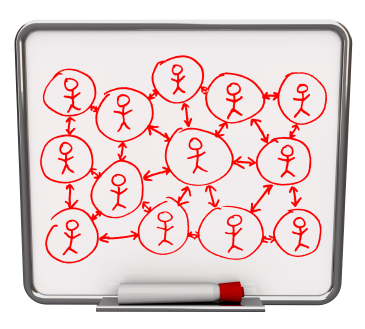
George Siemens and Stephen Downes, two thought leaders in the field of learning and technology, have termed the way in which we now acquire and manage knowledge “connectivism,” based on the idea that “knowledge is distributed across a network of connections, and therefore. . .learning consists of the ability to construct and traverse those networks” (Downes 2011). Therefore, it makes sense that one of the most important strategies for increasing our capacity as learners is to build a significant number of connections with others, and more importantly, to strive consciously to make the quality of these connections as high as possible.
Three factors take priority when assessing potential additions to my own learning networks:
Content
Is the connection a source of content that is consistently relevant and useful to me? Does the content help me to accomplish something? Does it stretch my thinking in meaningful ways?
Integrity
Is the connection trustworthy? Does the connection have the knowledge and experience to provide quality content? What is the quality of the connection’s network?
Diversity
Does the connection represent a viewpoint that is different in some meaningful way from my own? Or, if similar, will it add to my own by being significantly further along in knowledge and understanding?
Of course, there are other possible factors and other questions that can be asked about each – you should adapt and add to the above considerations to suit your needs. The key point is to be conscious of the factors that make a learning connection valuable to you and to apply these factors actively in managing your learning networks. Sometimes that means using them to find new connections; often it means using them to prune connections that do not have significant value.
It’s truly a matter of cultivating, not simply growing.
It is important to note that the term “network” is not limited to connections made using technology. We all have networks that, while possibly enhanced by technology, do not require technology. Our family, friends, co-workers, and colleagues in civic organizations or trade and professional organizations represent just a few examples.
I’ve addressed technology in other places, but the focus before technology comes into play should be on the actual points of connection – in network-speak, the “nodes”– and working to increase the quality of those points.
Finally, nothing here is meant to imply that you should take a cold, ruthless approach to managing your networks. Personally, I think networks and learning both benefit from a significant amount of chaos and complexity. Nonetheless, within all that chaos and complexity, you can strive to carve out and build upon a set of key connections that contribute significantly to your focused learning efforts.



Pingback: Connecting 131009 | Clyde Street
Pingback: Self Directed Learning – What Does It Really Involve? | Teachers Tech
I think one’s learning ability also depends on the surrounding environment
Pingback: Tweets that mention 10 Ways to Be a Better Learner: No. 2 – Cultivate Your Network -- Topsy.com